


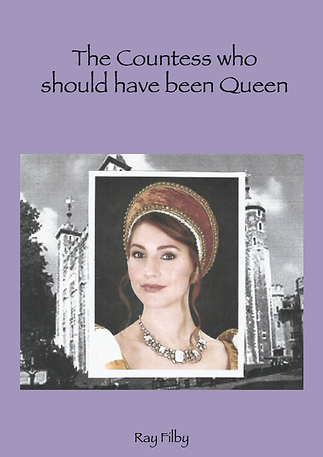
The story is set in the reign of Henry VI, the most tumultuous reign in English history, coming at the end of the Hundred Years’ War and covering most of the War of the Roses. The author therefore hopes the reader will bear with him as he includes a significant amount of historic detail in the early part of the book which is necessary to provide the context in which the main story is set.
Because of the complexity of the historic and dynastic setting, tables have been provided as appendices giving the outline family trees of the Houses of Lancaster and York, and a list of the main battles fought in the wars within which the story is set. To avoid confusion in identifying the characters in the book, a list is included at the beginning of the book, providing a who’s who of the main characters featuring in the story. This was felt to be specially necessary as a fairly limited number of forenames seem to be in use during that period of history, leading to duplication. Henry, Edward and Richard are recurring names of more than one character. There are two Henry Beauforts and two Edwards, Princes of Wales!
The story is of course a work of fiction but the author has tried to remain faithful to the known historic events of the time. In some cases, there have been contradictions in the sources used but a television presenter as eminent as the historian, Dr. Lucy Worsley, has declared herself that much of the history we receive in text-books provides a distorted presentation of the facts and is coloured by the interests of the people who write history for posterity. The author doesn’t therefore feel bad that there will be inaccuracies and distortions of history found in his own work of fiction. While I wouldn’t recommend historic fiction as a vehicle for learning history, it at least helps to cement the knowledge derived from a study of more authentic sources of history.